



~ Welcome to ~
Tummy Tyme
Age: 2 Months – 6 Months
Tuition: Free w/ one time enrollment fee
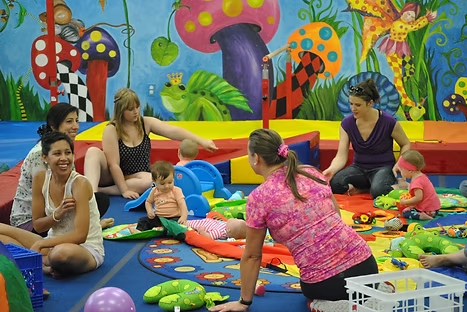
Classes will include baby stretching, baby strengthening, sensory stimulation, eye tracking and head movement, baby massage, head-eye coordination, head control and core strengthening. Tummy Tyme is a special bonding time for mom or dad with baby, but also a wonderful social time for moms and dads to meet others with children of the same age.
What to bring:
- Blanket or mat
- Baby’s favorite toy or rattle
- Burp cloth
Registration required before class attendance.
THINGS WE KNOW ABOUT CHILD DEVELOPMENT
Dr. Harvey Karp, pediatrician and author of ‘The Happiest Baby on the Block’, states the first 3 months after birth should be called the 4th trimester as human babies are born earlier than other species. Our brains are not fully developed at birth (except for our life support systems) and actually require experience to connect, develop and organize the brain. This ‘experience’ centers around movement and primitive reflexes which guide brain development.
The best movement for young babies begins with Tummy Time! Why is Tummy Time so important? Head control is central to movement control (which also helps brain development). So developing head control is a major step and Tummy Time is key to proper development. Tummy Time affects neck, abdominal and core muscles which are important in postural control and proper development.
Sleeping should always be on the back, but an alert, happy baby should have daily short spurts of Tummy Time for best overall development. A lack of Tummy Time has been shown to affect head shape, motor development and skeletal development.
0-3 Months: All About Learning to Live in the Outside World
During this period, babies learn to smile, raise their head when on their tummies (TT), track objects with their eyes, open and shut their hands, bring objects to their mouth, grip objects (can’t release objects until close to 3 months old) and swipe at toys within their sight (Pathways.org).
4-6 Months: Reaching Out and Touching the World
During this period, babies learn to roll over in both directions (front to back is usually first), laugh, babble, grab objects to manipulate and investigate, and to sit with support with good head control. Support babies on exercise balls with them on their tummies – closely monitor to keep babies safe. Babies of this age will use their hands to support themselves while sitting. While standing with your support, babies at this age should be able to support their entire weight with their legs. Babies should use both hands to explore toys and be able to transfer a toy from one hand to the other while lying on their backs.
“A child’s motor abilities have a significant impact on their success later on in school,” states R. Scott Ward, PT, PhD, President of the American Physical Therapy Association. Lack of Tummy Time has effects on head shape, motor development and skeletal development.
~ Our Testimonials ~